The common aortic diseases are.
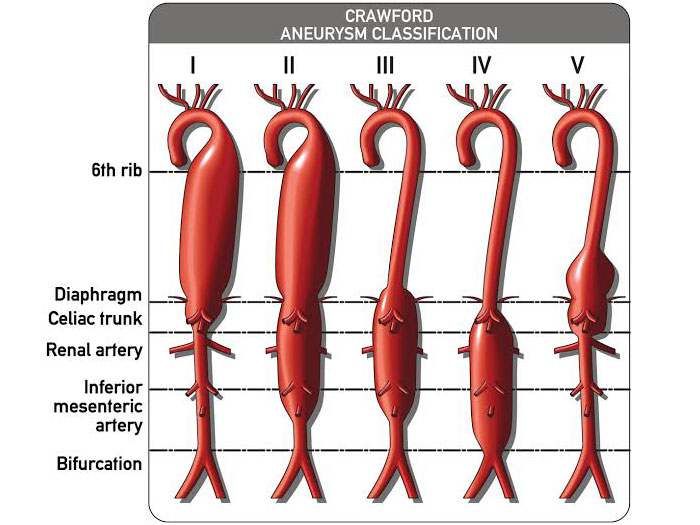
An aortic aneurysm is a bulge that occurs in the wall of the major blood vessel (aorta) that carries blood from the heart to the body. Aortic aneurysms can occur anywhere in the aorta and may be tube-shaped (fusiform) or round (saccular).
Aortic aneurysms include:
Abdominal aortic aneurysm
An abdominal aortic aneurysm occurs along the part of the aorta that passes through the abdomen.
Thoracic aortic aneurysm
A thoracic aortic aneurysm occurs along the part of the aorta that passes through the chest cavity.
Some people may have both types of aortic aneurysms
Having an aortic aneurysm increases the risk of developing a tear in the inner layer of the wall of the aorta (aortic dissection).
What are the causes for aneurysm?
- High blood pressure
- Infection
- Plaque buildup in your arteries (atherosclerosis)
- High cholesterol
- Sudden traumatic injury
What are the symptoms?
You might not know you have a thoracic aortic aneurysm because symptoms often don’t show up until the aneurysm becomes large, or bursts. But as it grows, you may notice some signs, including:
- Chest or back pain
- Difficulty breathing or swallowing
- Shortness of breath
- Coughing
- Hoarseness
Symptoms of Abdominal aortic aneurysm. :
- Back pain
- A deep pain on the side of your abdomen
- A throbbing sensation near your navel
If the aneurysm ruptures, you might feel sick to your stomach, or suddenly develop an intense pain in your back or abdomen. You might vomit, become sweaty, or feel dizzy.
How is it diagnosed?
Your doctor often can diagnose an aortic aneurysm with tests such as an X-ray, an echocardiogram, CT scan, or ultrasound. It's also often monitored on an annual basis to assess for growth.
Routine screenings, especially for specific genetic conditions, can also help your doctor find out if your chances are higher.
If they are, they might prescribe medications to lower your cholesterol and reduce your blood pressure.
If your aneurysm becomes a major problem or grows rapidly in size, you might need surgery. Your doctor will replace the damaged section of your aorta with a man-made tube. Once it’s in place, the graft will make that section of the aorta stronger.
Important Links: Best Heart Surgeon in Prabhadevi | Best Bypass Surgeon In Prabhadevi | Best Cardiologist In Prabhadevi | Best Tavi in Prabhadevi | Best Angioplasty in Prabhadevi | Best Transplant Doctor in Prabhadevi
Aortic surgery in Mumbai involves advanced procedures to manage life-threatening conditions such as aneurysms, dissections, and valve disorders. These diseases affect the aorta, the body’s main artery that carries blood from the heart to the rest of the body. At Revive Heart Institute, our aortic specialists in Mumbai provide cutting-edge surgical care using minimally invasive and open surgical techniques.
Symptoms of aortic dissection may mimic those of other diseases, often leading to delays in diagnosis. However, when an aortic dissection is detected early and treated promptly, the chance of survival greatly improves.
Symptoms
Aortic dissection symptoms may be similar to those of other heart problems, such as a heart attack. Typical signs and symptoms include:
- Sudden severe chest or upper back pain, often described as a tearing or ripping sensation, that spreads to the neck or down the back
- Sudden severe stomach pain
- Loss of consciousness
- Shortness of breath
- Symptoms similar to those of a stroke, including sudden vision problems, difficulty speaking, and weakness or loss of movement (paralysis) on one side of your body
- Weak pulse in one arm or thigh compared with the other
- Leg pain
- Difficulty walking
When to see a doctor
If you have severe chest pain, fainting, sudden shortness of breath or symptoms of a stroke, call local emergency number. These signs and symptoms aren't always due to a serious problem, but it's best to be seen by a doctor quickly. Early detection and treatment may help save your life.
Types:
An aortic dissection is caused by a weakened area of the aorta's wall.
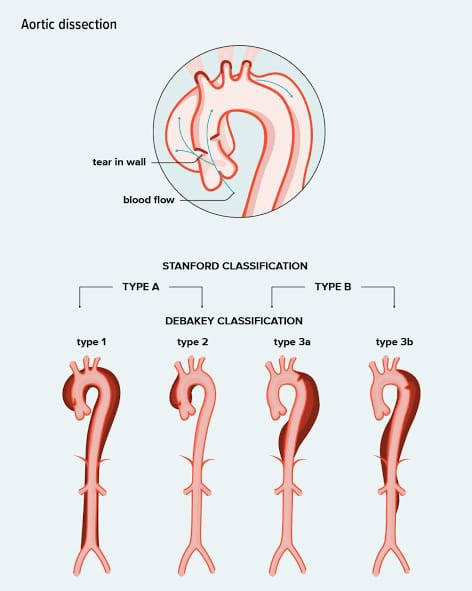
Aortic dissections are divided into two groups, depending on which part of the aorta is affected:
- Type A. This more common and dangerous type involves a tear in the part of the aorta where it exits the heart. The tear may also occur in the upper aorta (ascending aorta), which may extend into the abdomen.
- Type B. This type involves a tear in the lower aorta only (descending aorta), which may also extend into the abdomen.
Risk factors
Some of the things that may raise your risk of aortic dissection include:
- Uncontrolled high blood pressure (hypertension)
- Hardening of the arteries (atherosclerosis)
- Weakened and bulging artery (aortic aneurysm)
- An aortic valve defect (bicuspid aortic valve)
- A narrowing of the aorta at birth (aortic coarctation)
Certain genetic diseases increase the risk of having an aortic dissection, including:
- Turner syndrome. High blood pressure, heart problems and other health conditions may result from this disorder.
- Marfan syndrome. This is a condition in which connective tissue, which supports various structures in the body, is weak. People with this disorder often have a family history of aneurysms of the aorta and other blood vessels or family history of aortic dissections.
- Other connective tissue disorders This includes Ehlers-Danlos syndrome, a group of connective tissue disorders that involve loose joints and fragile blood vessels and Loeys-Dietz syndrome, which causes twisted arteries, especially in the neck.
Inflammation of the arteries (giant cell arteritis) may also increase your risk of aortic dissection.
Other potential risk factors for aortic dissection include:
- Sex. Men are more likely to have aortic dissection than women.
- Age. Aortic dissection is more likely in people age 60 and older.
- Cocaine use. This drug temporarily raises blood pressure.
- Pregnancy Infrequently, aortic dissections occur in otherwise healthy women during pregnancy.
- High-intensity weightlifting. This and other strenuous resistance training may raise your risk of aortic dissection by increasing blood pressure during the activity.
Complications
Possible complications of aortic dissection include:
- Death due to severe internal bleeding
- Organ damage, such as kidney failure or life-threatening intestinal damage.
- Stroke
- Aortic valve damage (aortic regurgitation) or rupture into the lining around the heart (cardiac tamponade)
Prevention
You can reduce your risk of an aortic dissection by preventing chest injury and taking steps to keep your heart healthy.
- Control blood pressure. If you have high blood pressure, get a home blood pressure measuring device to help you monitor your blood pressure.
- Don't smoke. If you do smoke, take steps to stop
- Maintain an ideal weight. Follow a low-salt diet with plenty of fruits, vegetables and whole grains and exercise regularly.
- Wear a seat belt This reduces the risk of chest injury during a car accident.
- Work with your doctor. If you have a family history of aortic dissection, a connective tissue disorder or a bicuspid aortic valve, tell your doctor. If you have an aortic aneurysm, find out how often you need monitoring and if surgery is necessary to repair your aneurysm.
- If you have a genetic condition that increases your risk of aortic dissection, your doctor may recommend medications, even if your blood pressure is normal.
Is aortic dissection treatable?
Type A or dissection involving the first part of aorta is a surgical emergency. The patient needs emergency of could be fatal.
The surgery is performed to replace the dissected segment of aorta. Some times even the aortic valve might need replacement ( called as Bentall’s procedure ). If the valve is healthy, an attempt could be made to preserve the aortic valve (the surgery is called David’s procedure or Yacoub’s procedure )
Important Links: Best Heart Surgeon in Prabhadevi | Best Bypass Surgeon In Prabhadevi | Best Cardiologist In Prabhadevi | Best Tavi in Prabhadevi | Best Angioplasty in Prabhadevi | Best Transplant Doctor in Prabhadevi
